Royal Caldelian Silver Jubilee

Royal Caldelian Silver Jubilee
Glorious Things of thee are Spoken

Thursday, July 29, 2021

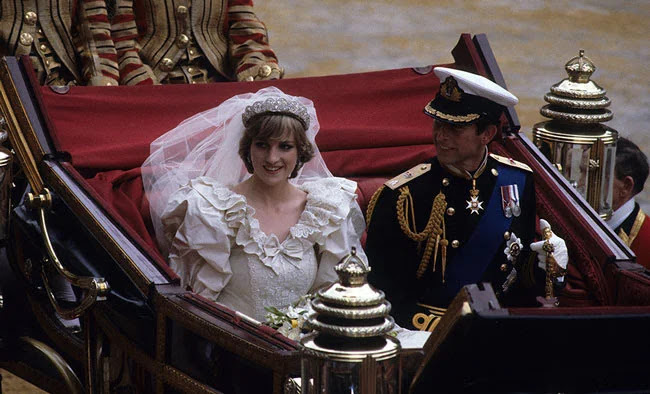
Prince Charles and Princess Diana's wedding day 40 years on: the dress, the service slip-ups and what it was like to be in the crowd


The couple married at St Paul's Cathedral on 29 July 1981.


Thursday marks the 40th anniversary of Prince Charles and Princess Diana's wedding, and while their marriage didn't last, the day was described at the time as a "fairytale" and actually included a lot of personal touches from the couple.


"It was the wedding of the century," Joe Little, managing editor of Majesty Magazine, tells HELLO! "Charles's sister Anne had got married in 1973, eight years earlier and that was a big deal because she was the first of the Queen's children to get married but it was nothing compared to how it was when Charles and Diana got married. It really was a big, big deal in 1981."

Joe was one of the 600,000 people who lined the streets to catch a glimpse of the royal bride and groom on a hot summer's day on 29 July 1981.

While there have been a number of royal weddings in recent years that have garnered global media attention, including that of Prince William and Kate Middleton, and Prince Harryand Meghan Markle, Joe says that Charles and Diana's nuptials was "bigger in many ways".


Diana’s £9,000 wedding dress unfold from the 1902 state landau . Billed as the fairytale wedding of the 80s , Diana’s wrinkled gown unfolds into a beautiful bride which today many royal reporters claim was unfolding of a 20 year old  bride into a fearless Queen  - The Royal Caldelian Mark 


"People had been camping along the route for several days beforehand," he says. "There was a rehearsal at St Paul's and on the eve of the wedding, there was a big fireworks display in Hyde Park and there were tens of thousands of people at that. So, it was a huge thing, which so many people wanted to take a personal part in and to be there."


Charles and Diana's wedding day was watched by millions around the globe

A nervous-looking Diana made her way up the altar of St Paul's Cathedral, arm-in-arm with her father, John, the 8th Earl Spencer before an invited congregation of 3,500 guests and an estimated global TV audience of 750 million.

Bridesmaids included Princess Margaret's 17-year-old daughter, Lady Sarah Armstrong-Jones (now Chatto) while Prince Andrew and Prince Edward acted as Charles' supporters.

Joe recalls: "I was in the thick of the atmosphere, you could hear the service as it was relayed to the public outside St Paul's and people were reacting to it as they exchanged vows."


Both Diana and Charles famously made mistakes in their wedding vows with the bride accidentally reciting her groom's name wrong, inadvertently calling him Philip Charles Arthur George, instead of Charles Philip Arthur George.

And according to the BBC, Prince Charles also slightly muddled his vows too, referring to "thy goods" rather than "my worldly goods".

The minor slipups didn't distract from their day, as the newlyweds walked down the aisle and emerged from the Cathedral to the roar of the crowds that had gathered outside.


The very impressive royal wedding cake

Joe recalls that the Prince "went to a great deal of trouble to get the music right for his wedding" with Charles and Diana both selecting their favourite hymns for the service. Among the Prince's choices were Elgar's Pomp and Circumstance No. 4 and New Zealand soprano Kiri Te Kanawa's performance of 'Let The Bright Seraphim' from Handel's Samson. Meanwhile, Diana selected her favourite hymn from her school days 'I Vow to Thee, My Country.'

After the service, Charles and Diana travelled in the open-topped state landau to Buckingham Palace and emerged on the balcony a few moments later to share a kiss.

Crowds gathered to watch the procession

The newlyweds then enjoyed a wedding breakfast with their closest family and friends, tucking into brill in lobster sauce and Princess of Wales chicken (chicken stuffed with fine lamb mousse) and traditional strawberries with cream.

The royal couple also had an incredible 27 wedding cakes for their big day — however, the official cake, which stood over five-feet tall, was made by David Avery, the head baker of the Naval Armed Forces. The cake featured personal touches including Charles' coat of arms in addition to Diana's family crest and their first name initials. The impressive dessert was topped off with roses, lilies of the valley and orchids.

A slice of the Prince and Princess of Wales's wedding cake is currently up for sale and is expected to fetch between £300 and £500 when it goes under the hammer on 11 August along with an order of service, ceremonial details and a royal wedding breakfast programme.


In a rare move, the couple's wedding gifts went on display

The couple received hundreds of gifts from the British public and Commonwealth countries, as well as royals from around the world. And in a move that we haven't seen at recent royal weddings, Joe recalls the gifts being displayed at St James's Palace after the wedding with proceeds from ticket sales going to charity.

Gifts included an engraved Steuben glass bowl and a handmade porcelain centrepiece by Boehm from US President Ronald Reagan and his wife Nancy, who was one of the high-profile guests at the royal wedding.

While the current generation of young royals has partied into the early hours at their wedding receptions, Charles and Diana were then whisked away to Waterloo Station to catch the train to Romsey in Hampshire to begin their honeymoon.


BY DANIELLE STACEY

Tuesday, June 1, 2021

The Royal Caldelian:The Rare gem


I know no horror for I lived  the grim & amiable years of History - The Royal Caldelian Mark 

Mark Caldelian has always believed in a world of possibilities where love and togetherness brings forth joy that never ends . His love for classical music transcends the gentle touch of love he exerts on scores with a faint smile that captures hearts and awe the minds . From Handel to Tchaikovsky whose music fragrantly echoes as his steps gently wallow the floors , it seems he was created in a star light which designs an uncanny resemblance of royalty, statesmanship and beauty , of course of all things beautiful and regal .


Standing across an archway , one can see the gestures of  a young early 20 year old , whose taste for the finer  things in life dazzles the rest of the 21st century peers watching his weirdly  6 eyes asking whose son is this ? His accent of course , how soothing one yearns to follow the tempo of his pronunciations I sometimes get lost in that unforgettable message . Not only do I get lost in his calm rather graceful speeches but the loads of refined , ancient and rare knowledge, wisdom and highly addictive topics he raises . 

I look at him from a distance and ask , whose son is this ? Does he not have a social  life like  us? He has friends? Why the taste for such music ranging from five hundred years ago ? Why the love for paintings and sculptures? He speaks and writes history as a living testament to events before his birth , Well I believe he is a 19th Century Duke who’s come back to the 21st century as my mind can settle on now. It is no suprise his leadership skills sweeps one away like the howling winds are of the prairie west. 

To my uttermost surprise , I chanced upon an afternoon meet at a cafeteria waiting to be served after a first session of a conference , I saw him walk over to my table and constantly Ghanaian  I always expect,  he introduced himself as mark and said “ Do you mind if I sit around here for some seconds ?” I quickly responded sure , as curious I was , I asked if he’s with company and got shocked with a reply no, for he was a loner . There waved at him two peers he arrived with for the conference , That was when I first met the man who will wow my imagination about how truly different he sees the world .


On our first talk , it was easy for I kept on asking questions about where he is from only to be told he is a student, 

I had in my thought he was one of the diplomatic envoys for his mannerisms did not give him out as a student . 

-The Royal Caldelian-

I gazed with admiration as I wished to be associated with the personality before me . 

Understanding him to be a very reserved figure , he marvels you with jokes I loved and laughed hard , highly beautiful yet cheeky jokes I Haven’t heard anyone play in a time aside the ones you watch with these British shows, he was poised and felt like I was engaging a British Prince . I watched him share life moments and highlight topics I remarked as highly intelligent, daring and a no touch area but he beautifully dissected them with power and beauty quoting dates and personalities linked with analogical thesis . 

“I fell in love with the man in front of me whose lips and eyes I cannot stop thinking about but the intelligence he wields are weapons of mass distraction I told myself .significantly humble and rare of any kind I have fixed eyes upon . He thinks not like our world, he loves unconditionally and cares for his kind” . 

I left the venue with his number and today we are the very best of friends . 


In our discussion of history , I asked what year he would love to travel to and he said “ I know no horror for I lived  the grim & amiable years of History”.


By :Anne-love Agyeiwaa Asante 


Thursday, May 13, 2021

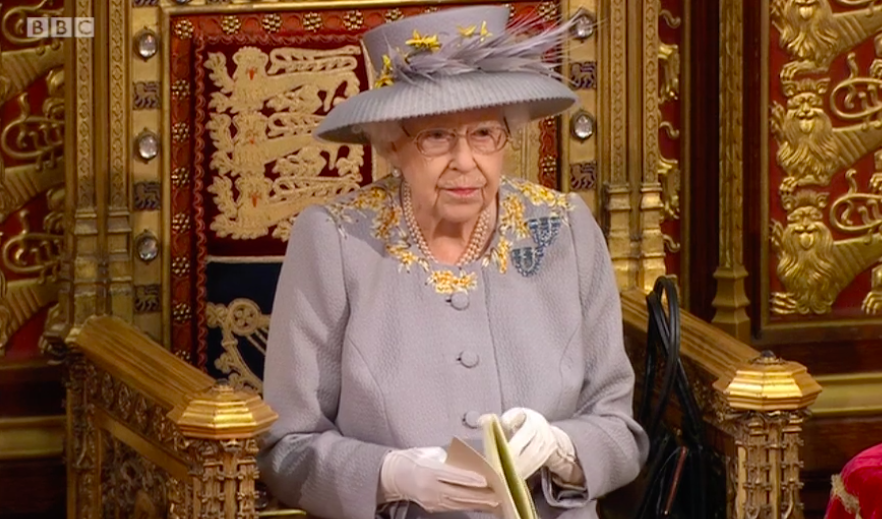
Queen Elizabeth II is NOT the Queen of England


Queen Elizabeth II is NOT the Queen of England – is it so hard to get it right?


Screenshot/Fair Use

I am a bit of a stickler for the correct usage of styles and titles. So it is a bit of a pet peeve of mine when these are used improperly. The main one that bugs me is calling Elizabeth II, Queen of England. That bothers me because “Queen of England” is not her correct title! Her correct title, simplified here, is Queen of the United Kingdom of Great Britain and Northern Ireland. England has not been a separate sovereign state since 1707.

For centuries England and Scotland were separate sovereign kingdoms, each with its own monarch. There was not always peace between the two states, and England constantly tried to keep Scotland subdued. Edward I (1272-1307) is not known as the Hammer of the Scots for nothing! The Kingdoms of England and Scotland remained separate until 1603. Queen Elizabeth I of England died without issue, and her closest relative that had a claim to the throne was her cousin King James VI of Scotland (1567-1625).

The accession of the Scottish king on the English throne did not politically unite the two nations. Both kingdoms were ruled by James but remained individual sovereign states that retained their own parliaments and laws. Although James liked to consider himself the King of Great Britain, this title had no legal bearing. From 1603 until 1707 (excluding the Commonwealth period), the monarch’s title was King or Queen of England and Scotland and Ireland (they also called themselves the Kings of France, but that is another story).

In 1707 came the Act of Union uniting the Parliaments of England and Scotland, creating the new nation of Great Britain. England and Scotland ceased to be independent sovereign states and were then, and now, considered separate states within the union. The title of the monarch changed accordingly, and the titles of King or Queen of England and Scotland passed into history. Anne was Queen of England and Scotland when the act was passed, and her title was changed to Queen of Great Britain.

The title remained King or Queen of Great Britain for 93 years when the nation expanded once more. Ireland was included in the political union with Great Britain, and the new state became the United Kingdom of Great Britain and Ireland. George III (1760-1820) was the monarch at the time, and his title changed accordingly. From 1714 to 1837, the British monarch was also Electors and then Kings of Hanover, and although their Hanoverian titles were listed among their British titles, Britain and Hanover were ruled separately and were not politically unified.

In 1920 in the reign of King George V (1910-1936), a large portion of Ireland was given its independence, and only the northern counties remained united with Britain. From that time until the present, the title of the monarch has been King or Queen of the United Kingdom of Great Britain and Northern Ireland.


Now having said my rant and given the historical background on the evolution of the title of the British monarch, I must be honest and say that I do miss the traditional titles of King or Queen of England and King or Queen of Scotland. Those are in the past unless devolution comes to the UK, and England and Scotland becomes independent once again. If that does happen, I think we would see a return to how things were prior to 1707, when both England and Scotland shared the same monarch.


Monday, May 3, 2021

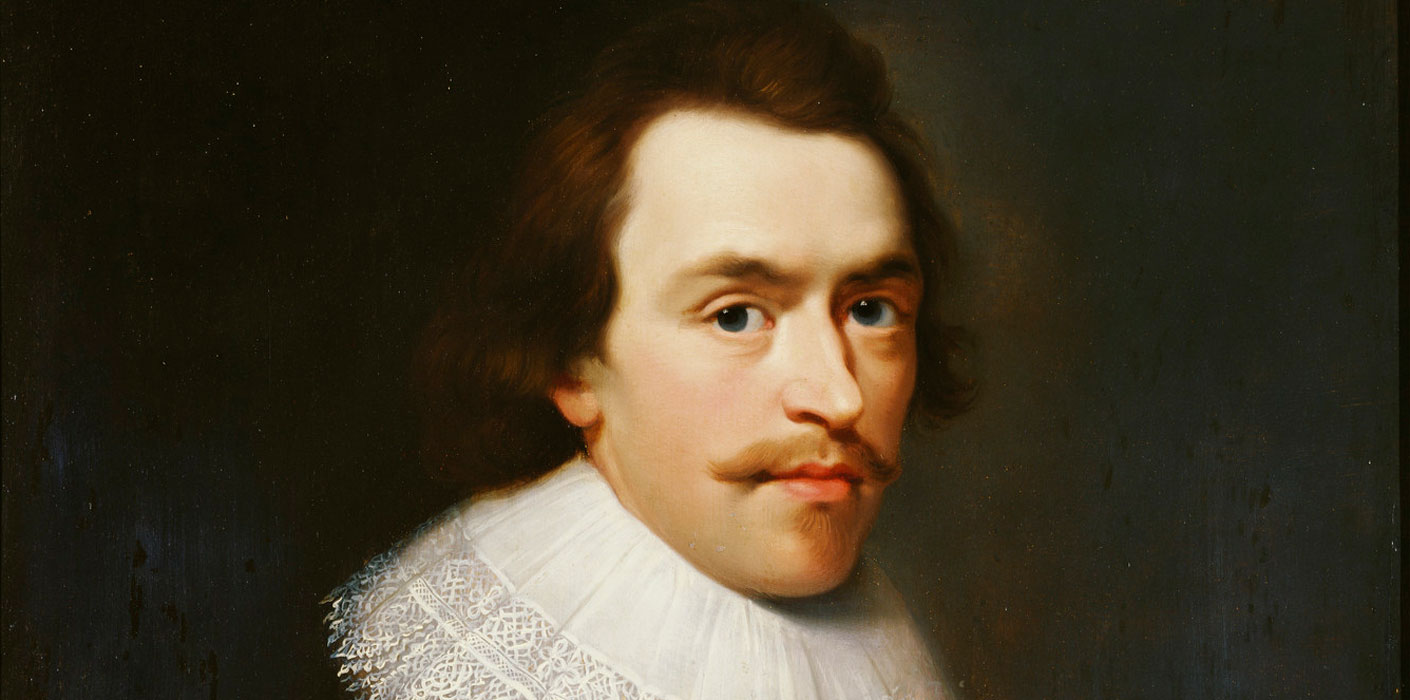
King Charles I , The Beheaded Monarch


Charles I (r. 1625-1649)

Charles I was born in Fife on 19 November 1600, the second son of James VI of Scotland (from 1603 also James I of England) and Anne of Denmark.

He became heir to the throne on the death of his brother, Prince Henry, in 1612. He succeeded, as the second Stuart King of Great Britain, in 1625.

Controversy and disputes dogged Charles throughout his reign. They eventually led to civil wars, first with the Scots from 1637, in Ireland from 1641, and then England (1642-46 and 1648). The wars deeply divided people at the time, and historians still disagree about the real causes of the conflict, but it is clear that Charles was not a successful ruler.

Charles was reserved (he had a residual stammer), self-righteous and had a high concept of royal authority, believing in the divine right of kings. He was a good linguist and a sensitive man of refined tastes.

He spent a lot on the arts, inviting the artists Van Dyck and Rubens to work in England, and buying a great collection of paintings by Raphael and Titian (this collection was later dispersed under Cromwell). Charles I also instituted the post of Master of the King's Music, involving supervision of the King's large band of musicians; the post survives today.

His expenditure on his court and his picture collection greatly increased the crown's debts. Indeed, crippling lack of money was a key problem for both the early Stuart monarchs.

Charles was also deeply religious. He favoured the high Anglican form of worship, with much ritual, while many of his subjects, particularly in Scotland, wanted plainer forms.

Charles found himself ever more in disagreement on religious and financial matters with many leading citizens. Having broken an engagement to the Spanish infanta, he had married a Roman Catholic, Henrietta Maria of France, and this only made matters worse.

Although Charles had promised Parliament in 1624 that there would be no advantages for recusants (people refusing to attend Church of England services), were he to marry a Roman Catholic bride, the French insisted on a commitment to remove all disabilities upon Roman Catholic subjects.

Charles's lack of scruple was shown by the fact that this commitment was secretly added to the marriage treaty, despite his promise to Parliament.

Charles had inherited disagreements with Parliament from his father, but his own actions, particularly engaging in ill-fated wars with France and Spain at the same time, eventually brought about a crisis in 1628-29.

Two expeditions to France failed - one of which had been led by The Duke of Buckingham, a royal favourite of both James I and Charles I, who had gained political influence and military power.

Such was the general dislike of Buckingham, that he was impeached by Parliament in 1628, although he was murdered by a fanatic before he could lead the second expedition to France.

The political controversy over Buckingham demonstrated that, although the monarch's right to choose his own Ministers was accepted as an essential part of the royal prerogative, Ministers had to be acceptable to Parliament or there would be repeated confrontations.

The King's chief opponent in Parliament until 1629 was Sir John Eliot, who was finally imprisoned in the Tower of London until his death in 1632.

Tensions between the King and Parliament centred around finances, made worse by the costs of war abroad, and by religious suspicions at home. Charles's marriage was seen as ominous, at a time when plots against Elizabeth I and the Gunpowder Plot in James I's reign were still fresh in the collective memory, and when the Protestant cause was going badly in the war in Europe.

In the first four years of his rule, Charles was faced with the alternative of either obtaining parliamentary funding and having his policies questioned by argumentative Parliaments who linked the issue of supply to remedying their grievances, or conducting a war without subsidies from Parliament.

Charles dismissed his fourth Parliament in March 1629 and decided to make do without either its advice or the taxes which it alone could grant legally.

Although opponents later called this period 'the Eleven Years' Tyranny', Charles's decision to rule without Parliament was technically within the King's royal prerogative, and the absence of a Parliament was less of a grievance to many people than the efforts to raise revenue by non-parliamentary means.

Charles's leading advisers, including William Laud, Archbishop of Canterbury, and the Earl of Strafford, were efficient but disliked.

For much of the 1630s, the King gained most of the income he needed from such measures as impositions, exploitation of forest laws, forced loans, wardship and, above all, ship money (extended in 1635 from ports to the whole country). These measures made him very unpopular, alienating many who were the natural supporters of the Crown.

Scotland, which Charles had left at the age of 3, returning only for his Scottish coronation in 1633, proved the catalyst for rebellion. Charles's attempt to impose a High Church liturgy and prayer book in Scotland had prompted a riot in 1637 in Edinburgh which escalated into general unrest.

Charles had to recall Parliament. However, the Short Parliament of April 1640 queried Charles's request for funds for war against the Scots and was dissolved within weeks.

The Scots occupied Newcastle and, under the treaty of Ripon, stayed in occupation of Northumberland and Durham and they were to be paid a subsidy until their grievances were redressed.

Charles was finally forced to call another Parliament in November 1640. This one, which came to be known as the Long Parliament, started with the imprisonment of Laud and Strafford (the latter was executed within six months, after a Bill of Attainder which did not allow for a defence), and the abolition of the King's Council (Star Chamber), and moved on to declare ship money and other fines illegal.

The King agreed that Parliament could not be dissolved without its own consent, and the Triennial Act of 1641 meant that no more than three years could elapse between Parliaments.

The Irish uprising of October 1641 raised tensions between the King and Parliament over the command of the Army. Parliament issued a Grand Remonstrance repeating their grievances, impeached 12 bishops and attempted to impeach The Queen.

Charles responded by entering the Commons in a failed attempt to arrest five Members of Parliament, who had fled before his arrival. Parliament reacted by passing a Militia Bill, allowing troops to be raised only under officers approved by Parliament.

Finally, on 22 August 1642 at Nottingham, Charles raised the Royal Standard calling for loyal subjects to support him. Oxford was to be the King's capital during the war. The Civil War, what Sir William Waller (a Parliamentary general and moderate) called 'this war without an enemy', had begun.

The Battle of Edgehill in October 1642 showed that early on the fighting was even. Broadly speaking, Charles retained the north, west and south-west of the country, and Parliament had London, East Anglia and the south-east, although there were pockets of resistance everywhere, ranging from solitary garrisons to whole cities.

However, the Navy sided with Parliament (which made it difficult for continental aid to reach the Royalists), and Charles lacked the resources to hire substantial mercenary help.

Parliament had entered an armed alliance with the predominant Scottish Presbyterian group under the Solemn League and Covenant of 1643, and from 1644 onwards Parliament's armies gained the upper hand - particularly with the improved training and discipline of the New Model Army.

The Self-Denying Ordinance was passed to exclude Members of Parliament from holding army commands, thereby getting rid of vacillating or incompetent earlier Parliamentary generals. Under strong generals like Sir Thomas Fairfax and Oliver Cromwell, Parliament won victories at Marston Moor (1644) and Naseby (1645).

The capture of the King's secret correspondence after Naseby showed the extent to which he had been seeking help from Ireland and from the Continent, which alienated many moderate supporters.

In May 1646, Charles placed himself in the hands of the Scottish Army (who handed him to the English Parliament after nine months in return for arrears of payment - the Scots had failed to win Charles's support for establishing Presbyterianism in England).

I go from a corruptible to an incorruptible Crown, where no disturbance can be

The final words of Charles I

Charles did not see his action as surrender, but as an opportunity to regain lost ground by playing one group off against another; he saw the monarchy as the source of stability and told parliamentary commanders 'you cannot be without me: you will fall to ruin if I do not sustain you'.

In Scotland and Ireland, factions were arguing, whilst in England there were signs of division in Parliament between the Presbyterians and the Independents, with alienation from the Army (in which radical doctrines such as that of the Levellers were threatening commanders' authority).

Charles's negotiations continued from his captivity at Carisbrooke Castle on the Isle of Wight (to which he had 'escaped' from Hampton Court in November 1647) and led to the Engagement with the Scots, under which the Scots would provide an army for Charles in exchange for the imposition of the Covenant on England.

This led to the second Civil War of 1648, which ended with Cromwell's victory at Preston in August.

The Army, concluding that permanent peace was impossible whilst Charles lived, decided that the King must be put on trial and executed. In December, Parliament was purged, leaving a small rump totally dependent on the Army, and the Rump Parliament established a High Court of Justice in the first week of January 1649.

On 20 January, Charles was charged with high treason 'against the realm of England'. Charles refused to plead, saying that he did not recognise the legality of the High Court: it had been established by a Commons purged of dissent, and without the House of Lords - nor had the Commons ever acted as a judicature.

The King was sentenced to death on 27 January. Three days later, Charles was beheaded on a scaffold outside the Banqueting House in Whitehall, London.

On the scaffold, he repeated his case: 

I must tell you that the liberty and freedom [of the people] consists in having of Government, those laws by which their life and their goods may be most their own. It is not for having share in Government, Sir, that is nothing pertaining to them. A subject and a sovereign are clean different things. If I would have given way to an arbitrary way, for to have all laws changed according to the Power of the Sword, I needed not to have come here, and therefore I tell you ... that I am the martyr of the people

The King was buried on 9 February at Windsor, rather than Westminster Abbey, to avoid public disorder. To avoid the automatic succession of Charles I's son Charles, an Act was passed on 30 January forbidding the proclaiming of another monarch. On 7 February 1649, the office of King was formally abolished.

The Civil Wars were essentially confrontations between the monarchy and Parliament over the definitions of the powers of the monarchy and Parliament's authority.

These constitutional disagreements were made worse by religious animosities and financial disputes. Both sides claimed that they stood for the rule of law, yet civil war was by definition a matter of force.

Charles I, in his unwavering belief that he stood for constitutional and social stability, and the right of the people to enjoy the benefits of that stability, fatally weakened his position by failing to negotiate a compromise with Parliament and paid the price.


To many, Charles was seen as a martyr for his people and, to this day, wreaths of remembrance are laid by his supporters on the anniversary of his death at his statue, which faces down Whitehall to the site of his execution. After eleven years of Parliamentary rule (known as the Interregnum), Charles's son, Charles II was proclaimed King in 1660.

Monday, April 26, 2021

The 10th Wedding Anniversary of TRH, The Duke & Duchess of Cambridge


Every day this week, we’re looking back at the wedding of TRH The Duke and Duchess of Cambridge in the Abbey ten years ago, on 29 April 2011.


In the days before the wedding, preparations inside the Abbey began in earnest. The nave aisle was transformed into an avenue of trees, with six field maples and two hornbeams brought in to line the route of the bride’s procession to the High Altar.


The Abbey was decorated with almost 30,000 flowers, mostly from the royal estates at Sandringham and Windsor, including azaleas, rhododendron, euphorbias, wisteria, beech and lilac. The choices reflected the couple’s love of the English countryside.


Then, as the day of the wedding dawned, Abbey staff were on hand to complete the last-minute preparations before the Great West Doors were opened to the 2,000 specially-invited guests.

Friday, April 9, 2021

The Prince Philip, Duke of Edinburgh. His Royal Highness passed away peacefully this morning at Windsor Castle.”

9th April 2021


#BREAKING 


A statement from Buckingham Palace said: “It is with deep sorrow that Her Majesty The Queen has announced the death of her beloved husband, His Royal Highness The Prince Philip, Duke of Edinburgh. His Royal Highness passed away peacefully this morning at Windsor Castle.”


Philip and the Queen were married for more than 70 years.


The Duke of Edinburgh has died, Buckingham Palace has announced.


Philip, 99, was the longest-serving consort in British history.


The duke and the Queen were married for more than 70 years and Philip dedicated decades of his life to royal duty, serving the nation at the monarch’s side.


He officially retired from public engagements in the summer of 2017.


Further announcements will made in due course.


“The Royal Family join with people around the world in mourning his loss.”


The death of the duke comes in the midst of the worst public health crisis for generations as the UK and countries around the globe reel from the devastating impact of the coronavirus pandemic.


Philip had returned to Windsor Castle on March 16 to be reunited with the Queen after spending a month in hospital – his longest ever stay.


He initially received care for an infection but then underwent heart surgery for a pre-existing condition.


The duke had looked gaunt as he was driven away from King Edward VII’s Hospital in central London, having been pushed in a wheelchair to the waiting car.


Philip – father to the Prince of Wales, the Princess Royal, the Duke of York and the Earl of Wessex – was just two months away from his 100th birthday in June.


He spent much of the Covid-19 crisis staying with the Queen at Windsor in HMS Bubble – the nickname given to the couple’s reduced household of devoted staff during lockdown.

ASTORIA GALLERY

Christmas Message

  Sunset on Venice Beach, California  Christmas Eve The Royal Caldelian Christmas Message  As we gather to celebrate this season of joy, we ...