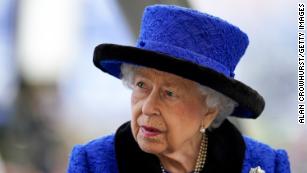
HM Queen Elizabeth II has made her wishes publicly known in regards to HRH Camilla, The Duchess of Cornwall's Title when the time comes for HRH Charles, The Prince of Wales to accede to the throne.
"... it is my sincere wish that, when that time comes, Camilla will be known as Queen Consort as she continues her own loyal service." Thus, The Duchess of Cornwall WILL be known as HM The Queen Consort. The proper way to address her will be HM The Queen.
The significant announcement was made by HM Queen Elizabeth II in her Platinum Jubilee message to the nation released earlier today.
At the time of the Prince of Wales marriage it was stated that the Duchess of Cornwall would be known as Princess Consort when the time arrived. HOWEVER, as we have stated in this page for many years, that wording was removed from the Clarence House website many years ago AND to create a Princess Consort Title would have to be signed off by Parliament and agreed upon by all the Commonwealth countries. A process that would take many years to complete and was never even started.
Britain's Queen Elizabeth II has used the historic milestone of her Platinum Jubilee to redefine the future of the monarchy, calling for the Duchess of Cornwall to be known as Queen Camilla when Charles becomes King.
When Charles married Camilla in 2005, the couple announced she intended to be known as "Princess Consort" despite having a right to the title of Queen. It was seen as a recognition of the sensitivities around a title that was destined for Charles' first wife, Diana.
It's the same reason Camilla doesn't use the title of Princess of Wales.
The Queen would be expected to consult her direct heirs Charles and William before making such a significant announcement about titles, which suggests they both agreed and felt the British public is ready to accept Camilla as Queen.
"I would like to express my thanks to you all for your support. I remain eternally grateful for, and humbled by, the loyalty and affection that you continue to give me," the Queen said.
"And when, in the fullness of time, my son Charles becomes King, I know you will give him and his wife Camilla the same support that you have given me; and it is my sincere wish that, when that time comes, Camilla will be known as Queen Consort as she continues her own loyal service."
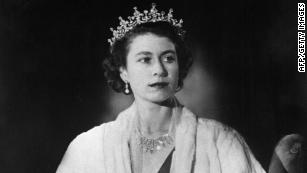
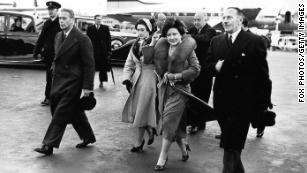
70 years ago, Queen Elizabeth II took the throne
When her father died in 1952, Elizabeth II — then just 25 years old — became the Queen of England.
1 of 16
It's a hugely significant intervention from the monarch, who is the only person who can define royal titles.
Camilla became something of a public pariah following the breakdown of Charles and Diana's union in the mid-90s.
Diana had blamed Camilla for ruining her marriage, saying in a 1995 television interview, "There were three of us in this marriage, so it was a bit crowded." A year earlier, Charles had also appeared on television and confessed his infidelity, but maintained he had only been unfaithful once his marriage had crumbled.
Prince Andrew of Britain was stripped by his mother Queen Elizabeth II of his military affiliations and royal patronages as he continues fighting a New York lawsuit that accuses him of sexually abusing an underage girl while she was in thrall to sex criminal Jeffrey Epstein.
Virginia Giuffre’s sexual abuse lawsuit against Prince Andrew is unstoppable, as a New York judge rejected the Prince’s efforts to dismiss her claim on Wednesday.
Giuffre, who has alleged that the late financier Jeffrey Epstein and Ghislaine Maxwell sexually abused her, said they forced her into sex with the Duke of York at age 17.
"The Duke of York will continue not to undertake any public duties and is defending this case as a private citizen," Buckingham Palace said.
Queen Elizabeth II and Prince Andrew, Duke of York watch a flypast from the balcony of Buckingham Palace during Trooping The Colour, the Queen's annual birthday parade, on June 8, 2019 in London, England.
Max Mumby | Getty Images Entertainment | Getty Images
Andrew, who had been a close friend of Epstein, also no longer will use the style "His Royal Highness" in any official capacity, according to a royal source, Reuters reported.
The news agency also reported that Andrew's official roles will be handed to other members of the royal family.
"With The Queen's approval and agreement, The Duke of York's military affiliations and Royal patronages have been returned to The Queen," Buckingham Palace said in a statement.
"The Duke of York will continue not to undertake any public duties and is defending this case as a private citizen."
The letter said that Andrew had "fallen well short of" the military's highest standards of "probity, honesty and honourable conduct."
"It is hard not to see, when senior officers are reportedly describing him as 'toxic', that he has brought the services he is associated with into disrepute," the letter said.
Virginia Giuffre claims in her Manhattan federal court lawsuit that she had sex with the prince at age 17 several times at the direction of Ghislaine Maxwell, who recently was convicted at a criminal trial in the same court of procuring other underage girls to be sexually abused by Epstein.
Andrew denies Giuffre's allegations and has said he does not recall ever meeting her.
Epstein, who also had previously been friends with former Presidents Donald Trump and Bill Clinton, died in 2019 in a Manhattan federal jail while awaiting trial on child sex trafficking charges. Officials ruled that he committed suicide by hanging.
The Christmas Truce, when British and German soldiers were said to have suddenly stopped fighting on the Western Front for a few hours on Christmas Day 1914, is written in history.
Adding to the Christmassy mood in the trenches was the snowy Christmas Eve weather. That first December of the war was a sodden affair. Trenches became mud pits, especially for the allies, who in the early days didn’t have the duckboards (wooden planks) which the superior German trenches were fitted with.
But on Christmas Eve, a cold snap struck northern France, freezing the mud and delivering a storybook dusting of snow to the battlefields.
With snow and trees in place, all that was missing for that real Christmas feel was gifts and merry company. For one extraordinary evening, the men found those things too.
“In some sectors, you couldn’t put your head above the parapet for fear of snipers and artillery fire,” Professor Stanley says.
“Indeed, about 80 British soldiers were killed in fighting on Christmas Day.”
But at other locations along the line, the miracle began to unfold.
“The Germans would call out ‘Hey Tommy’ and, gradually, officers would come out to negotiate a truce in No Man’s Land.
Eventually, the men crawled out of the trenches to meet the men they’d been trying to kill just hours earlier. The official excuse was that they were burying the dead, but in reality, this was all about goodwill and the Christmas spirit.
The men exchanged badges and buttons, tobacco and sausage, all the while showing each other pictures of their families.
The men weren’t allowed to visit each other’s trenches. That would have disclosed the number of machine guns and other confidential information.
But at other locations along the line, the miracle began to unfold.
It’s Thursday,24th, December, 1914 11.57p.m.
A man, scrambles up on the firing step from the sodden duckboard below. White clouds billow from his numb lips as he sighs with relief. He is finally free of the cold water that lapped at his boots. leaning forwards onto the frozen mud, he positions his rifle on the parapet. As he stares through the wire past the shattered trees, a line of small lights begins to flicker. The constant hiss, crack and whirl of a thousand guns fall silent. Listening hard he becomes aware of a melody sung by gentle voices of mere boys. The crescendo fills the stark space bouncing off the sandbags to his rear. As they reach the end of the sweet tune, he clears his throat and begins to sing. The bright moon fell and the winter sun coloured the horizon, they sang carols and hymns exchanging season’s greetings beside the makeshift crosses of midwinter graves.
Close to 11am, a solitary frame dodging the shell pocked pools delivers a message of peace. A truce. One by one the tattered frames climb up, stretch and stand tall in no mans land. A handshake. With cigarette in hand, he bows his head and accepts the offered flame. They laugh and talk of young curvaceous girls they long to hold. Gifts exchanged; a cheer erupts as the ball arches out of the trench. Two hours pass as they become teenagers once more, having a kick about with the lads as the enemy for a short time became a friend in the war to end all wars.
Clement James Barker was born in Witnesham, Suffolk on 14th, December, 1883. His parents, Frederick and Agnes ran The Barley Mow public house in the village. In September, 1897 he left Northgate Grammar school, Ipswich and began an apprenticeship with Mr. Groom, where he stayed for 5 years learning the art wood carving but Clement looking for a life of adventure joined the army in 1901.
By sheer luck his war record survived, one of the charred collections named WO363. They describe the 18-year-old as 5ft 7inc, 128lbs with a dark complexion, brown eyes and dark brown hair. A year later he become Lance Corporal of his regiment, the Grenadier Guards. However, in early 1903 the offer was discontinued after he was charged with receiving stolen goods and a second count of stealing from a comrade, for which he spent 56 agonising days in jail. The experience must have been life changing for the young Clement as he did not to make the same mistake again. After extending his service he once again began to climb the ranks and by 1912 he was appointed Sergeant, reaching Lance Sergeant (A Corporal acting as Sergeant). That spring he married his sweetheart Margaret Isles at St Phillips church, Buckingham Palace Road, London, surrounded by his comrades, He then spent two years treasuring married life before the world changed irreversibly.
In July, 1914, war broke out in Europe and Clement and his school friend Russell Dale were sent to the western front. There they were to experience the terrifying realism of their chosen career. Five months of foul weather, violent storms and endless rain turned the trenches into a quagmire. With poor drainage its reported water collected 3ft deep causing trenches to collapse and the soldiers to experience the agony of trench foot. The young men shivered in inadequate dress in the barren wilderness of earth.
It’s Friday, 25, December, 1914.
The sound of infectious laughter echoes through no mans land. A sound so sadly missed by boys who became men that year. As they conversed and swapped treasured possessions, the man stands back and take his time to survey the scene. He feels a surge of peace fill his soul, as tiny hairs stand upright on pimples all over his skin. A Picture captured in his head ready to share with his loved ones he missed so dear. He snaps back to the moment as his childhood friend clips him on the back letting out a raucous laugh at a risqué joke, he had heard many times before. A cheer erupts as the ball arches out of the trench. He ducks and dives on the attack as the ball flies between the Bully beef cans that mark out the goal. The Germans fight back and finish the match throwing light hearted jeers at their foe.
As night fell that historic Christmas day Clement slid back into the trench and took up the mighty sword and relied the events to his wife. The letter he penned 4 days later to his brother Montague was found by his Nephew Rodney and was revealed in 2012 on BBCs Antiques roadshow. He writes of conversations about how fed up the Germans were and how many had deserted or given themselves up as prisoners rather than fighting for the cause. He finished stating how things were “looking quite rosy”.
I found his friend Lance Corporal Russell Charlie William Dale by sheer luck. Seeing two Ipswich lads of a similar age in the same battalion and regiment I had to investigate. Feeling they just had to have known each other. It turned out that they knew each other spending their youth in the same well-trodden streets. Dale did not survive the war. He died at Ypres on 13th,December, 1917 the records state he dies from wounds. The same day Clement earnt a meritorious award and was mentioned in despatches within the London Gazette. I like to think the two events are connected that the boys were together that Dale did not die alone.
Clement survived the war and left the Army in 1920 when he took up a job with the Ministry of Defence. He died in 1943, in Colchester. Its not clear where he is memorialised.
Singing Breaks Out in the Trenches on Christmas Eve
At about 10 p.m., Bairnsfather noticed a noise. “I listened,” he recalled. “Away across the field, among the dark shadows beyond, I could hear the murmur of voices.” He turned to a fellow soldier in his trench and said, “Do you hear the Boches [Germans] kicking up that racket over there?”
British soldiers began to sing back. “Suddenly,” Bairnsfather recalled, “we heard a confused shouting from the other side. We all stopped to listen. The shout came again.” The voice was from an enemy soldier, speaking in English with a strong German accent. He was saying, “Come over here.”
One of the British sergeants answered: “You come half-way. I come half-way.”
An illustration of soldiers fraternizing on Christmas Day 1914, drawn by World War I British soldier and cartoonist Bruce Bairnsfather.
Virginia Mayo/AP Photo
British and German Soldiers Meet in the 'No Man's Land'
What happened next would, in the years to come, stun the world and make history. Enemy soldiers began to climb nervously out of their trenches, and to meet in the barbed-wire-filled “No Man’s Land” that separated the armies. Normally, the British and Germans communicated across No Man’s Land with streaking bullets, with only occasional gentlemanly allowances to collect the dead unmolested. But now, there were handshakes and words of kindness. The soldiers traded songs, tobacco and wine, joining in a spontaneous holiday party in the cold night.
Bairnsfather could not believe his eyes. “Here they were—the actual, practical soldiers of the German army. There was not an atom of hate on either side.”
And it wasn’t confined to that one battlefield. Starting on Christmas Eve, small pockets of French, German, Belgian and British troops held impromptu cease-fires across the Western Front, with reports of some on the Eastern Front as well. Some accounts suggest a few of these unofficial truces remained in effect for days.
For those who participated, it was surely a welcome break from the hell they had been enduring. When the war had begun just six months earlier, most soldiers figured it would be over quickly and they’d be home with their families in time for the holidays. Not only would the war drag on for four more years, but it would prove to be the bloodiest conflict ever up to that time. The Industrial Revolution had made it possible to mass-produce new and devastating tools for killing—among them fleets of airplanes and guns that could fire hundreds of rounds per minute. And bad news on both sides had left soldiers with plummeting morale. There was the devastating Russian defeat at Tannenberg in August 1914 and the German losses in the Battle of the Marne a week later.
By the time winter approached in 1914, and the chill set in, the Western Front stretched hundreds of miles. Countless soldiers were living in misery in the trenches on the fronts, while tens of thousands had already died.
Not Everyone Was Pleased With the Truce
At least one account has survived of a Christmas Truce gone bad: the story of Private Percy Huggins, a Briton who was relaxing in No Man’s Land with the enemy when a sniper shot to the head killed him and set off more bloodshed. The sergeant who took Huggins’ place, hoping to avenge his death, was then himself picked off and killed.
In another account, a German scolded his fellow soldiers during the Christmas Truce: “Such a thing should not happen in wartime. Have you no German sense of honor left?” That 25-year old soldier’s name was Adolf Hitler.
Neither was high command pleased with the festivities. On Dec. 7, 1914, Pope Benedict had implored leaders of the battling nations to hold a Christmas truce, asking "that the guns may fall silent at least upon the night the angels sang." The plea was officially ignored.
So when a truce spontaneously broke out, the leaders of all the armies were reportedly horrified. British General Sir Horace Smith-Dorrien wrote in a confidential memorandum that "this is only illustrative of the apathetic state we are gradually sinking into." Some accounts of the Christmas Truce hold that soldiers were punished for fraternization, and top command issued orders that it should never happen again.
For the rest of World War I—a conflict that would ultimately claim roughly 15 million lives—no Christmas Truces appear to have occurred. But in 1914, these curious holiday get-togethers reminded all those involved that wars were fought not by forces but by human beings. For years after, the Truce became fodder for everything from artwork to made-for-TV-movies to advertisements and popular songs.
The Story Behind The Beloved Christmas Carol "Silent Night"
Silent Night was written in 1818 by Joseph Mohr and Franz X. Gruber
It was 202 years ago when "Silent Night" was first heard by Austrian in Oberndorf. How did this simple melody, with its words of comfort, become a beloved hymn of peace throughout the world?
It's a song about a calm and bright silent night, and the wonder of a tender and mild newborn child, words written in 1816 by a young priest in Austria, Joseph Mohr, not long after the Napoleonic wars had taken their toll.
"The backstory is that the priest went for a walk before he wrote it, and he looked out over a very quiet, winter-laden town," says composer/conductor John Conahan, who co-organized theSilent Night Sing-In with WRTI in 2018 and 2019, and created a new arrangement of the famous carol. "He was inspired...the town was at peace."
It was Christmas Eve, 1818, when the now-famous carol was first performed as Stille Nacht Heilige Nacht. Joseph Mohr, the young priest who wrote the lyrics, played the guitar and sang along with Franz Xaver Gruber, the choir director who had written the melody.
An organ builder and repair man working at the church took a copy of the six-verse song to his home village. There, it was picked up and spread by two families of traveling folk singers, who performed around northern Europe. In 1834, the Strasser family performed it for the King of Prussia. In 1839, the Rainer family of singers debuted the carol outside Trinity Church in New York City.
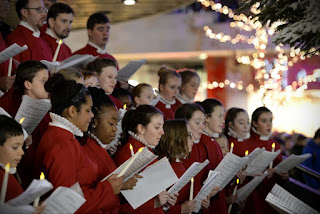
The composition evolved, and was translated into over 300 languages with many different arrangements for various voices and ensembles. It was sung in churches, in town squares, even on the battlefield during World War I, when, during a temporary truce on Christmas Eve, soldiers sang carols from home. "Silent Night," by 1914, known around the world, was sung simultaneously in French, German and English.
Over the years, the carol's mystique grew with its popularity. After the original manuscript was lost, for decades, some speculated that the music had been written by Haydn, Mozart or Beethoven. In 1994, an original manuscript was found in Mohr's handwriting, with Gruber named as composer.
Today, the Franz Xaver Gruber Museum in Hallein and the Joseph Mohr School in Wagrain, Austria honor the creators of this classic carol. The Stille Nacht Gesellschaft—or Silent Night Society—hosts a virtual Silent Night museum, tracks events, and promotes the use of all six verses, which in the words of Silent Night Society president "[encourage] peace and [demand] responsibility for the globe."
Soldiers sang the song as part of the famed Christmas truce in 1914
By December 1914, World War I was raging — but along the Western Front, a miraculous thing happened: in the week leading up to Christmas, British, French and German soldiers laid down their arms, crossed into each other's trenches, played games and exchanged gifts. They also sang songs — one of which was reportedly Silent Night, which, by that time, would have been familiar to most of the soldiers, even if it was sung in different languages.
The English version of "Silent Night" is typically sung in three verses corresponding with the original 1, 6, and 2.
Silent night, holy night, all is calm, all is bright. 'Round yon Virgin Mother and Child, Holy Infant so tender and mild. Sleep in heavenly peace, Sleep in heavenly peace.
Silent night, holy night! Shepherds quake at the sight! Glories stream from heaven afar, heavenly hosts sing Alleluia! Christ, the Savior is born, Christ, the Savior is born.
Silent night, holy night, Son of God, love's pure light. Radiant beams from thy holy face, with the dawn of redeeming grace. Jesus, Lord, at Thy birth, Jesus, Lord, at Thy birth.
The Mobile app provides essential services to students of the communication department. The app comes with delightful features from radio ,registration portal , forum , discussion platform and an online marketplace
Ehyen
For your fast rides to campus and ride out of campus choose the number one safest and convenient ride available,Ehyen .Prompt and easy to go, Ehyen provides best of security, comfort and discount . Choose Ehyen now
Odospice
Love comes with its own dynamic, do you struggle finding someone to speak with about your personal love struggles ? Odospice is here to listen and provide solutions through its counseling session . Download the odospice app to spice up love ♥️